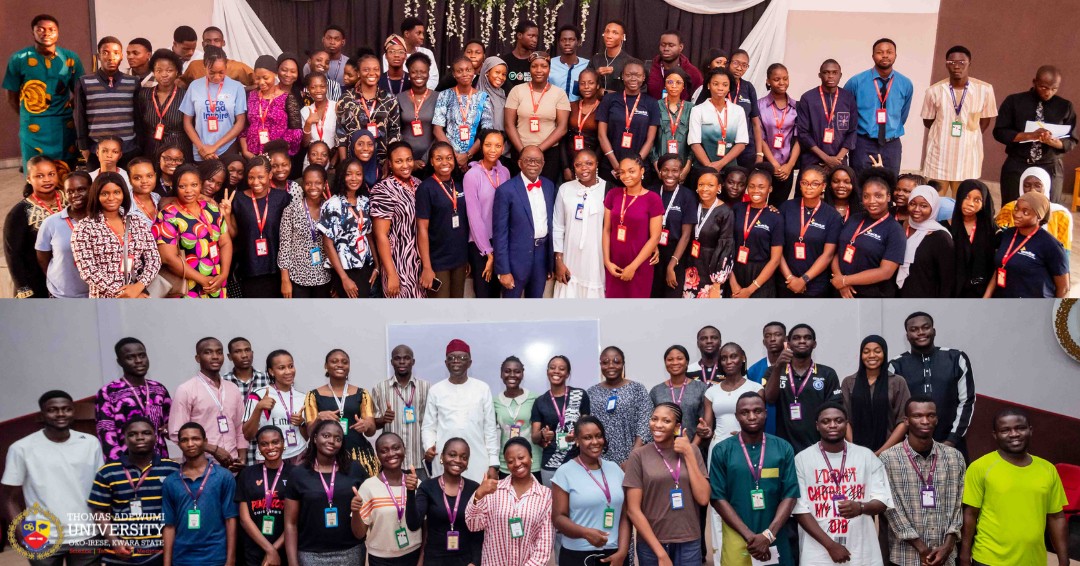
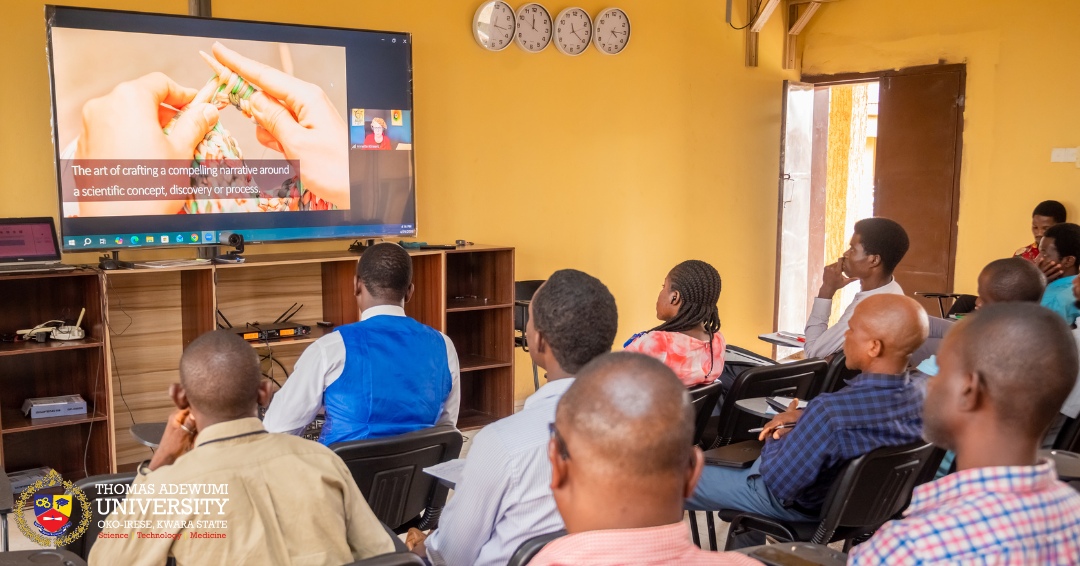
Thomas Adewumi University (TAU), through its Directorate of Research, Innovations and Product Development (DRIPDEV), has successfully hosted the 3rd Edition of the Faculty Seminar Series, further reinforcing the institution’s commitment to research excellence, interdisciplinary learning, and solution-driven academic engagement.
The seminar featured a thought-provoking presentation titled “Antibiotics: A Wonder or Wanton?” delivered by Mrs. Faith J. OLAITAN from the Faculty of Computing and Applied Sciences.
Welcoming participants to the session, the Director of DRIPDEV, Dr. Eniafe F. AYETIRAN, appreciated faculty members, students, and distinguished scholars in attendance. He reiterated the purpose of the Faculty Seminar Series as a platform established to foster intellectual discourse, encourage interdisciplinary collaboration, and promote the exchange of innovative research ideas within the University community.
Dr. Ayetiran subsequently introduced the speaker, describing Mrs. Olaitan as a committed academic and researcher whose work continues to contribute meaningfully to the field of microbiology and public health.
The citation of the speaker highlighted Mrs. Olaitan as a lecturer in the Department of Biological Sciences with research interests spanning medical, food, industrial, and pharmaceutical microbiology. She was described as a passionate scholar dedicated to advancing scientific knowledge through impactful research and teaching.
Taking the center stage, Mrs. Olaitan delivered an engaging presentation that examined both the life-saving benefits and the growing global concerns surrounding antibiotic misuse and resistance.
In her introduction, she defined antibiotics as naturally occurring secondary metabolites produced by bacteria and fungi to inhibit or destroy bacterial growth. She further explained that antibiotics can either be naturally derived from microorganisms or synthesized in laboratories.
Providing historical context, she traced the origin of antibiotics to the discovery of Penicillin, the first antibiotic isolated from Penicillium notatum by English microbiologist Alexander Fleming in 1928. According to her, this discovery revolutionized medicine and transformed the treatment of infectious diseases worldwide.
Mrs. Olaitan explained that antibiotics function either by killing bacteria or inhibiting their growth and highlighted the various classes of antibiotics used in modern medicine. She noted that the objective of her presentation was to examine antibiotics both as “wonder drugs” that transformed healthcare and as a misused resource contributing to a global antibiotic resistance crisis.
Describing antibiotics as a “wonder,” she stated that they are often regarded as miracle drugs because of their remarkable ability to selectively target harmful bacteria without significantly harming the host. She emphasized that antibiotics remain one of the foundational pillars of modern medicine.
According to her, antibiotics revolutionized the treatment of bacterial infections, significantly reduced mortality rates from once-fatal diseases, improved global life expectancy, and enabled advancements in surgery, organ transplantation, cancer chemotherapy, neonatal care, and prophylactic treatment during high-risk medical procedures. She further explained that without antibiotics, many routine medical treatments and procedures considered safe today would pose serious health risks.
Moving beyond their benefits, Mrs. Olaitan extensively discussed the wanton use of antibiotics, describing it as the indiscriminate or excessive use of antibiotics without proper clinical necessity or consideration of long-term consequences. She revealed that nearly half of the global population obtains antibiotics without prescription, while approximately 80 percent of antibiotic use occurs within community settings.
The presentation identified several determinants of antibiotic misuse from both public and healthcare provider perspectives. Public-related factors included self-medication, over-the-counter access to antibiotics, poor public awareness, misconceptions that antibiotics are cure-all drugs, patient pressure on healthcare providers, sharing leftover medications, and poor adherence to treatment instructions.
On the healthcare provider side, she identified inappropriate prescribing practices, reliance on empirical therapy without laboratory confirmation, unnecessary use of broad-spectrum antibiotics, prolonged prophylactic antibiotic use, heavy patient loads, inadequate diagnostic facilities, and weak antimicrobial stewardship systems as key contributors to irrational antibiotic use.
Mrs. Olaitan also highlighted economic, regulatory, agricultural, and environmental factors contributing to antibiotic misuse, including counterfeit medications, weak drug regulation enforcement, unregulated drug markets, and the influence of pharmaceutical marketing. Addressing the consequences of antibiotic misuse, she explained how antibiotic resistance develops through the natural selection of resistant bacteria, posing severe threats to global public health.
Speaking specifically on Nigeria, she noted that antimicrobial resistance (AMR) has become a major public health challenge, with the country ranked among nations with high AMR-related mortality rates. She discussed the drivers and precursors of resistant bacteria and the growing burden antibiotic resistance places on healthcare systems globally.
The seminar also explored the global public health impact of antibiotic resistance and strategies for mitigating the crisis. Mrs. Olaitan emphasized that antibiotic resistance spreads through interconnected human, animal, and environmental systems and therefore requires a coordinated One Health Approach integrating all sectors. She outlined practical approaches to combating antibiotic resistance at the individual, healthcare, research, and policy levels, stressing the importance of responsible antibiotic use, surveillance, public awareness, and scientific innovation.
As part of the presentation, Mrs. Olaitan shared aspects of her ongoing research work focused on plant-based alternatives to conventional antibiotics. She revealed that her research involves evaluating the phytochemical composition, pharmacological properties, and toxicological effects of lower plants such as ferns, orchids, and mistletoes found within Kwara State against clinical isolates of Salmonella typhi and Escherichia coli.
In her concluding remarks, Mrs. Olaitan stressed that antibiotics remain life-saving “wonder drugs” when properly used but become dangerous agents when abused, accelerating antibiotic resistance and reducing humanity’s ability to effectively treat infections in the future. She noted that antibiotic resistance is not merely a medical issue but also a behavioral and societal challenge requiring shared responsibility across human health, animal health, and environmental systems.
The seminar concluded with an interactive question-and-answer session during which participants sought clarifications and contributed valuable perspectives on antimicrobial resistance and responsible healthcare practices.
The 3rd Edition of the Faculty Seminar Series once again demonstrated Thomas Adewumi University’s dedication to fostering cutting-edge research, promoting intellectual engagement, and addressing pressing global challenges through academic innovation. Through initiatives such as the Faculty Seminar Series, TAU continues to strengthen its reputation as a forward-looking institution committed to excellence in research, teaching, and societal impact.