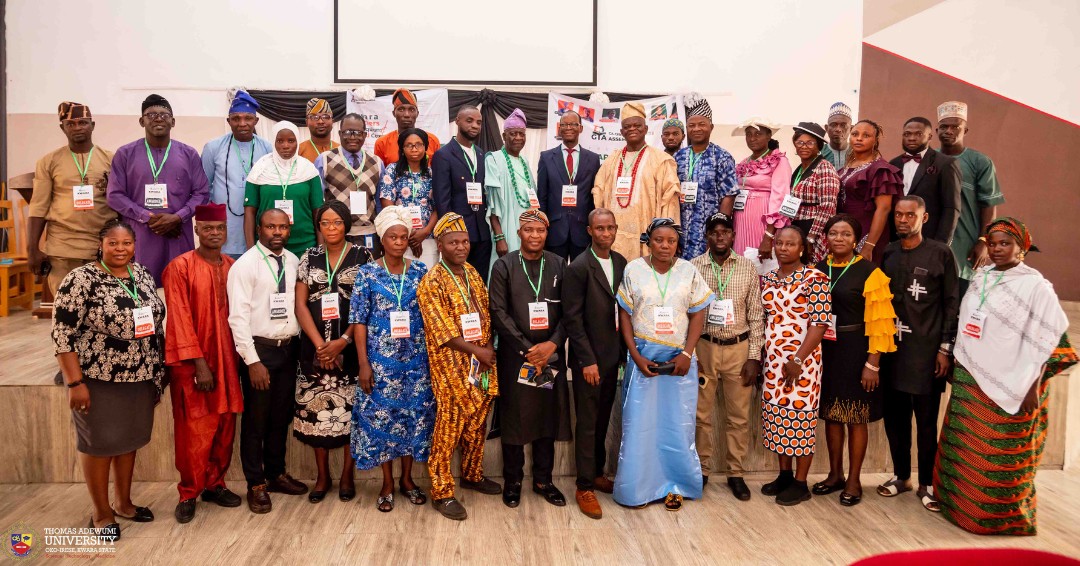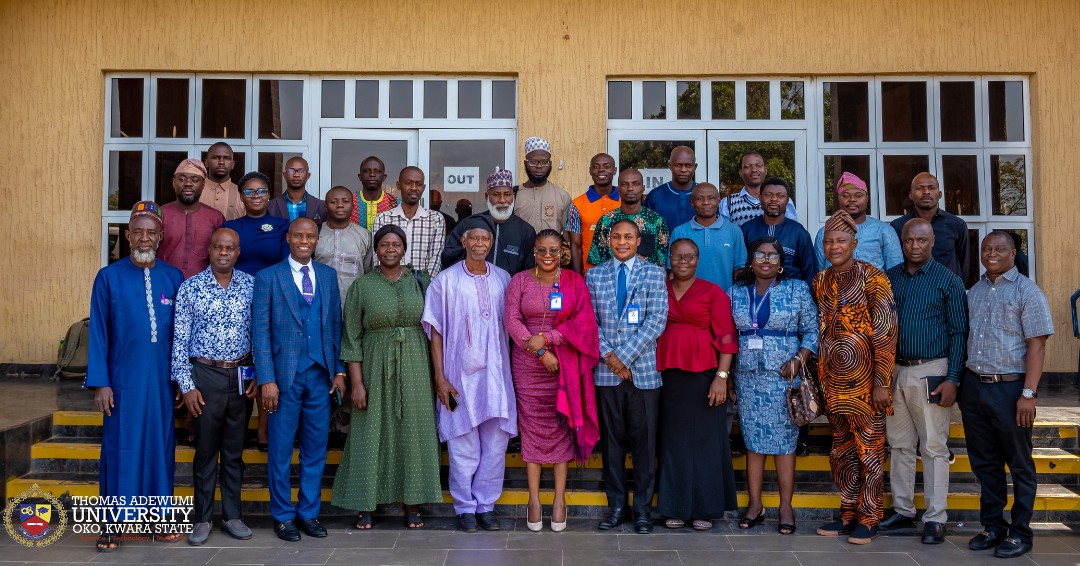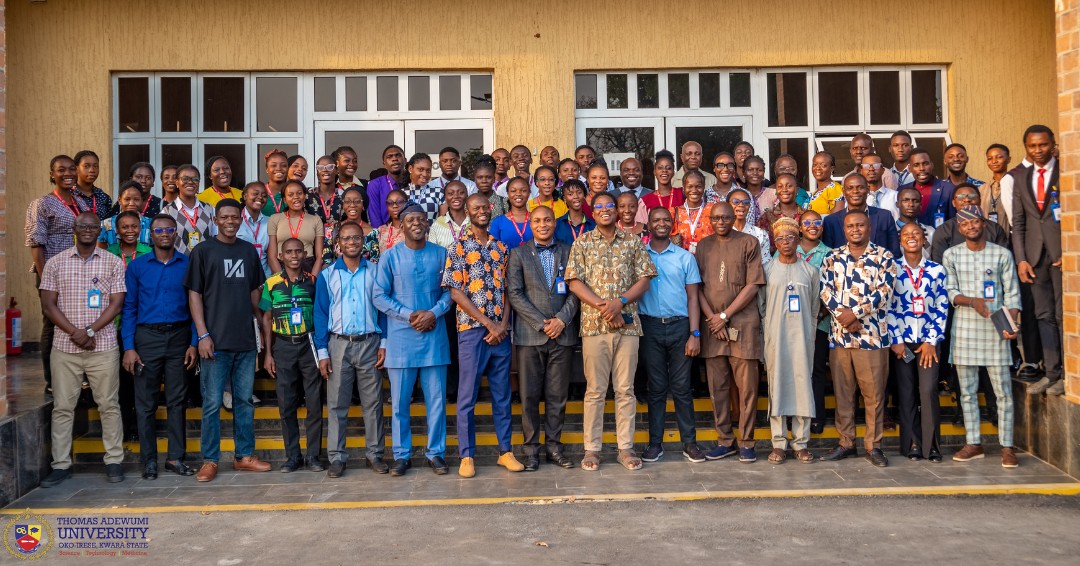
Thomas Adewumi University successfully hosted the RUDN University Professional Scholarship Courses on 16th and 17th February 2026, further strengthening its commitment to global academic collaboration and professional development.
The two-day intensive programme, organized in collaboration with the Center for Continuing Professional Education, Faculty of Philology, RUDN University, Russia, featured expert facilitators including:
-
Dr. Muhammed Jamiu Mustapha, Associate Professor of Mass Communication & Researcher in Geopolitical Communications, RUDN University of Russia.
-
Dr. Rasaq M. Adisa, Associate Professor of Mass Communication, University of Ilorin.
-
Dr. Imaam-Tamim K. Muhammed, Associate Professor of Law, University of Ilorin.
-
Dr. Adebayo Z. Bello, Head, Department of Educational Technology, Kwara State University of Education, Ilorin.
The professional intensive scholarship short courses focused on:
-
Implementing Ethical AI in Academic Research and Writing
-
Digital Pedagogy for Higher Education Teachers
Day One: Implementing Ethical AI in Academic Research and Writing
The first day brought together staff and students for an engaging session on “Implementing Ethical AI in Academic Research and Writing,” facilitated by Dr. Muhammed Jamiu Mustapha. He noted that the course was originally designed for professional researchers and aimed at promoting responsible AI adoption in academia.
The course outline covered:
-
Foundations of Ethical AI in Academia
-
AI and Research Integrity
-
Transparency, Disclosure, and Citation
-
Future Directions and Responsible AI Adoption
Dr. Mustapha emphasized the core ethical principles of academic writing, including: Academic Integrity, Transparency and Disclosure, Human Oversight and Accountability, Verification and Accuracy. He clearly distinguished between permissible and non-permissible uses of AI in academic writing, highlighting ethical versus unethical applications. He further explained the Ethical Triad: Plagiarism – Theft of ideas or words; Fabrication – Making up data or sources; Falsification – Manipulating research results.
By the end of the session, participants gained practical skills in recognizing and avoiding ethical breaches, safeguarding data confidentiality, ensuring proper authorship, and validating AI-generated outputs to prevent fabricated or biased material.
The second session was facilitated by Dr. Rasaq M. Adisa, who explored “AI and Research Integrity: Ethical Applications for Literature Review and Data Analysis.” He demonstrated advanced research strategies including the use of exCITATION in Google Scholar and Boolean logic techniques such as “AND,” “OR,” "quotation marks", and "brackets" to refine literature searches. He also discussed the benefits of exCITATION tools and provided a practical checklist for editing AI-assisted writing to ensure natural, human-sounding prose.
To conclude the day, Dr. Mustapha encouraged participants to embrace AI as a “co-pilot” rather than a replacement for intellectual rigor. He stressed maintaining intellectual control, treating AI as a research assistant, embracing disruption responsibly, and mastering the power of deliberate and transparent prompting.
Day Two: Digital Pedagogy for Higher Education Teachers
Day two commenced with a session on Digital Pedagogy for Higher Education Teachers, facilitated by Dr. Mustapha. He explained that the course was designed to equip educators with contemporary, technology-enabled strategies that promote student-centered learning.
The course outline included:
-
Understanding Digital Pedagogy
-
Student-Centered Methods: Connectivism, Case-Based Learning (CBL), Problem-Based Learning (PBL), and Field-Based Learning (FBL)
-
Digital Tools and Emerging Technologies for Teaching
Dr. Mustapha highlighted that digital pedagogy leverages technology to achieve effective teaching and outlined its key features: affordability, ease of teaching, interactive learning, flexibility, and enhanced learning outcomes. He also presented nine steps to quality teaching in the digital age and emphasized the importance of soft skills required in today’s technology-driven environment.
Following his presentation, Dr. Imaam-Tamim K. Muhammed took the stage to further elaborate on student-centered pedagogical methods. He explained that:
-
Connectivism emphasizes digital literacy, online networks, and collaborative learning communities.
-
Case-Based Learning (CBL) focuses on analyzing real-life or hypothetical scenarios.
-
Problem-Based Learning (PBL) centers on solving real-world problems.
-
Field-Based Learning (FBL) connects classroom theory with practical, real-world experiences.
Participants learned how to facilitate engaging classroom processes tailored to the “Anxious Generation” and gained practical strategies for integrating one or more of these methods into their courses.
To round off the programme, Dr. Adebayo Z. Bello, Educational Leader and Head of Educational Technology at Kwara State University of Education, delivered a practical session on Digital Tools and Emerging Technologies for Pedagogy. He emphasized how digital tools enhance student engagement and support blended and online learning.
Dr. Bello discussed adopting, adapting, and integrating digital tools and demonstrated practical applications using platforms such as Google Classroom, Canva, Testmoz, Poll Everywhere and Kahoot, giving participants hands-on exposure to modern teaching technologies.
At the close of the two-day programme, the Vice-Chancellor, Professor Francisca O. Oladipo, expressed heartfelt appreciation to all facilitators for their impactful contributions and for honoring TAU with their presence. She reaffirmed the University’s commitment to fostering global partnerships and equipping its academic community with relevant skills for the digital age.
The RUDN University Professional Scholarship Courses once again positioned Thomas Adewumi University as a forward-thinking institution dedicated to academic excellence, innovation, and international collaboration.